
As an Amazon Associate, Tested Reviews earns from qualifying purchases.
Our 3 picks, at a glance
- 3/4-Inch Horse Stall Mats: our top pick, the default for heavy lifting, affordable and nearly indestructible
- Rolled Rubber Flooring: the finished, professional look with fewer seams, and the odor-free option for indoor installs
- Interlocking EVA Foam Tiles: the budget option for light cardio and dumbbell work
How we picked
The evidence base for this guide: 7 discussion threads and 52 comments from Bogleheads, TexAgs, and IH8MUD forums, dated 2014-08-10 through 2023-11-19, plus aggregated owner quotes. We grouped the reported strengths, complaints, and failure modes by flooring type, and we only recommend options the evidence clearly supports. To be completely plain about our method: we did not buy, test, or handle any of these products. This guide is a research synthesis that reports what owners and community threads say.
Gym flooring is the least glamorous purchase in a home gym and one of the most argued about. The threads agree on the stakes: the wrong floor means cracked tile, a deadlift that rattles the house, or a rubber smell that follows you into the bedroom. The right floor disappears under your training. Below are the three options the evidence supports most strongly, with their honest trade-offs.
Pick 1: 3/4-Inch Horse Stall Mats
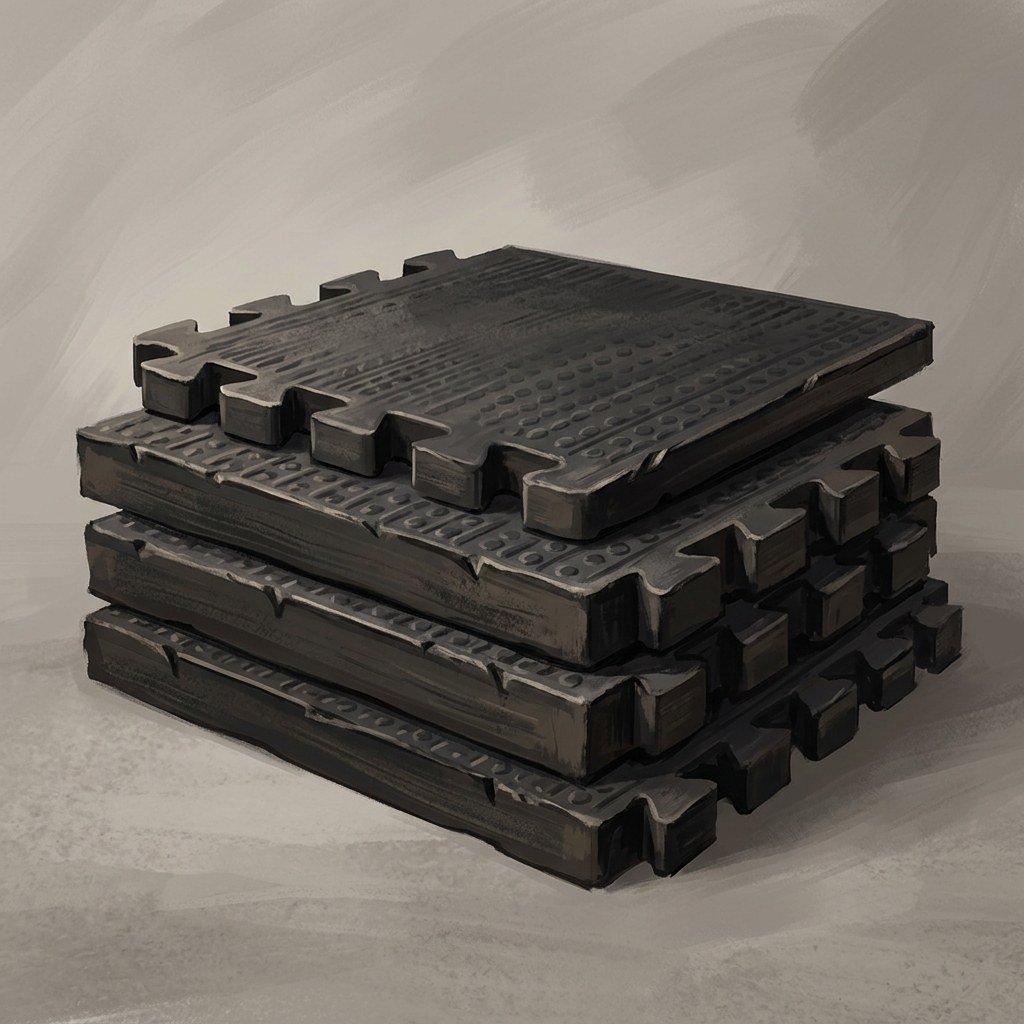
3/4-Inch Horse Stall Mats
- The default recommendation across 5 of 7 threads, with 14 owner mentions for heavy barbell work
- Affordable next to rolled rubber, and owners call them essentially indestructible
- 3/4 inch thickness handles deadlifts and dropped dumbbells, where 1/4 inch is judged too thin
- Heavy enough to stay put with no glue or adhesive
Check the current price on Amazon:
Why it won
When home gym owners argue about flooring, horse stall mats are the position everyone else is arguing against. Fourteen owner mentions across five threads make them the clear default for heavy lifting, and the praise is practical rather than enthusiastic: they are cheap, they are thick, and they do not move. “Another vote for cow stall mats. They’re a bit clumsy to get home from the store at 4x6x.75 and weighing around a 100 lbs a piece,” wrote destinationnc, which doubles as the buying advice, since these come from farm and feed stores rather than fitness retailers. Rooster1 summed up the value case: “Affordable and essentially indestructible.” The thickness is the point. Owners judge 1/4 inch too thin for dropped weights, while the 3/4 inch stall mat is the default for deadlift areas, and the weight that makes them a chore to haul home is the same weight that keeps them planted with no glue.
The catches, honestly
The smell is the real tax on this pick, and the evidence refuses to agree on how long it lasts. Eleven mentions across four threads report rubber off-gassing with durations ranging from days to years, and the TexAgs off-gassing thread runs net negative on using stall mats indoors. ScubaHogg describes the mitigation that worked: “It took a few days for them to off gas completely. I recall reading that sitting in the sun helped, so during the day I would drag them outside.” Plan to air new mats outside before they come in, and think twice about a bedroom install. The second catch is the 100 lb weight: nine mentions call transport, trimming, and installation a genuine chore. One long-term owner also reports small rubber granules shedding when the mats are moved, a handling nuisance rather than structural failure. And one IH8MUD owner warns about construction: “I bought some horse stall mats from the local farm and feed, and found they were pressed together little rubber balls. Which proceeded to break apart and roll all over the place.” Buy solid, all-black mats, not crumb-rubber construction, since solid mats did not show this problem.
Pick 2: Rolled Rubber Flooring
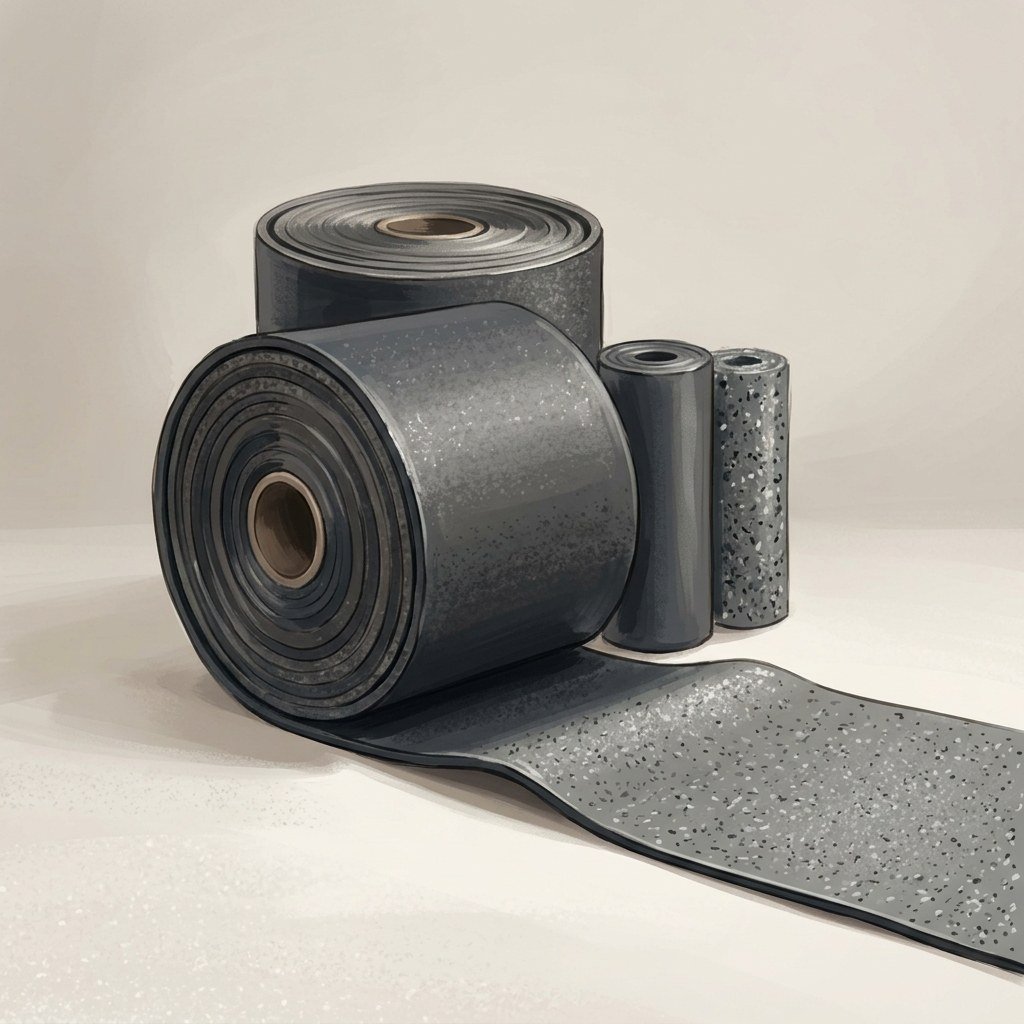
Rolled Rubber Flooring
- Professional, wall-to-wall appearance with far fewer seams than individual mats
- Can be odor-free from day one, the answer for indoor and apartment installs
- 3/8 inch rolls suit general training and equipment protection
Check the current price on Amazon:
Why it won
Rolled rubber is what owners buy when the gym shares space with the rest of life. “You can go wall to wall, it looks really professional, but it costs some serious coin compared to horse stall mats,” wrote ponyboy, and that sentence is the whole trade in miniature. Fewer seams means a cleaner look and fewer edges to catch, and the decisive advantage over stall mats is smell: owners report rolled rubber arriving odor-free, which makes it the recommendation for bedrooms and apartments where airing mats outside for days is not an option. For general training and protecting tile, hardwood, or concrete under equipment, the 3/8 inch roll is the commonly discussed thickness.
The catches, honestly
Cost is the catch, stated plainly and repeatedly: rolled rubber runs much more than stall mats, with owners framing it as a serious step up in spend for the same square footage. Thickness is the second consideration. At 3/8 inch, a roll gives up half the impact absorption of a 3/4 inch stall mat, so owners doing heavy deadlifts and Olympic lifts still double up mats in the drop zone or build a plywood-plus-mat platform rather than relying on a single layer of anything. If your training is mostly machines, dumbbells, and conditioning, the roll is plenty. If you pull heavy from the floor, budget for a dedicated drop zone on top of it.
Pick 3: Interlocking EVA Foam Tiles
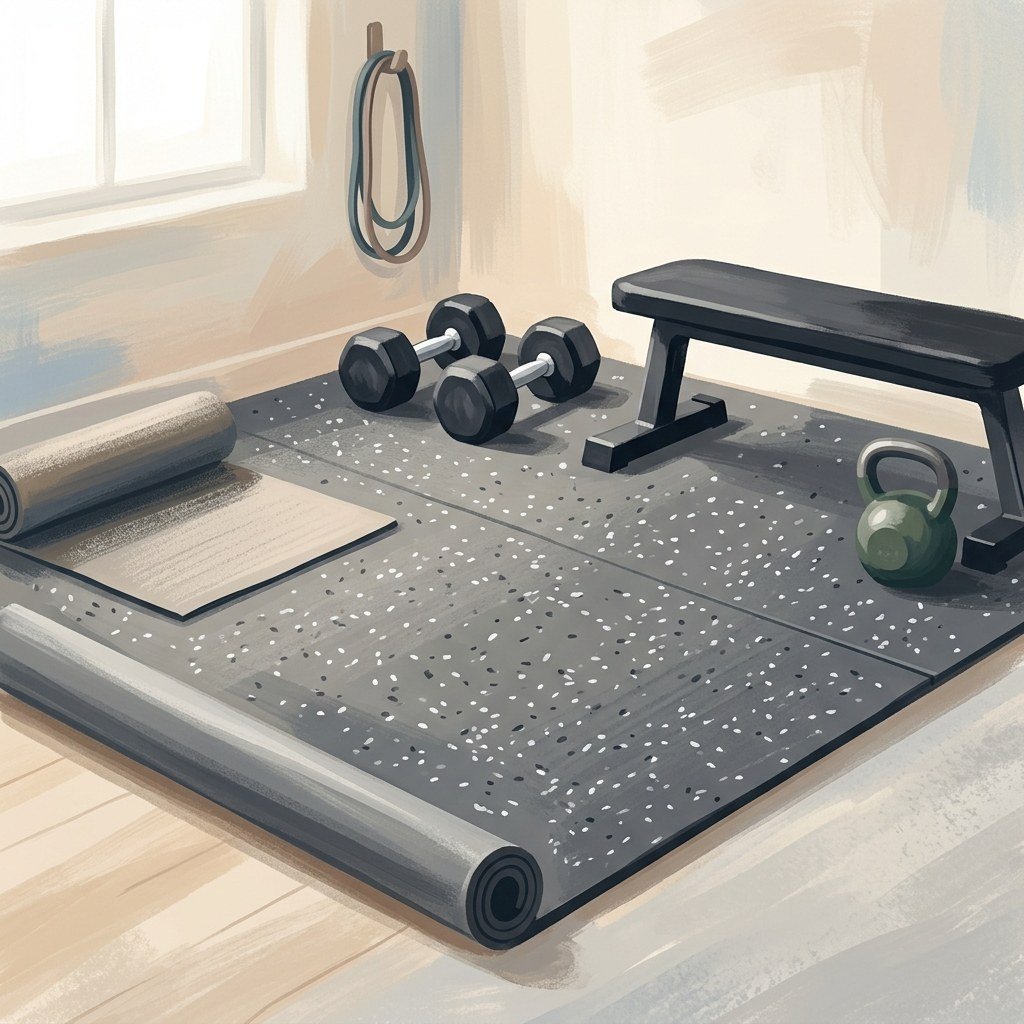
Interlocking EVA Foam Tiles
- Cheap and adequate for light cardio equipment, the lowest cost entry point
- Light and easy to install, with none of the 100 lb hauling that stall mats demand
- One owner pairs foam tiles with a harder rubber mat under the squat rack, foam everywhere else
Check the current price on Amazon:
Why it won
Foam tiles win the category the evidence actually gives them: light use on a budget. Owners describe them as cheap and adequate under cardio equipment, and the hybrid setup one owner reports, a harder rubber mat under the squat rack with EVA foam elsewhere, is the smartest foam deployment in the threads. If your training is a spin bike, light dumbbells, and floor work in a spare bedroom, foam is the rational buy, and buyers doing mostly cardio with light dumbbells may not need stall mats at all.
The catches, honestly
Do not put foam under a barbell. The evidence is blunt: “The EVA foam was too squishy, occasionally slippery, and sometimes would disconnect from other pieces,” wrote anewboglehead, and two threads agree foam is wrong for heavy lifting. Foam is a floor covering for light training, not impact protection for iron. Size your purchase to the training, not the room.
Making it work: thickness, smell, and setup
Thickness first. The threads treat 1/4 inch as too thin for dropped weights and 3/4 inch stall mats as the default for deadlift areas, with 3/8 inch rolled rubber sitting in the middle for general training. For deadlifts and Olympic lifts specifically, owners double up mats in the drop zone or build a plywood-plus-mat platform rather than trusting any single layer. Match the thickness to the heaviest thing you will drop, not the average workout.
Smell second, because it is the complaint that generates the most regret. Indoor bedroom or apartment installs are the most contentious scenario in the evidence. The owner playbook: buy the mats, drag them outside, let the sun and air work for a few days, and ventilate the room after install. If that sounds like too much project, that is exactly the signal to choose odor-free rolled rubber flooring instead. There is no prize for enduring a rubber smell for months when the alternative exists.
Fit third. Not every home gym needs the heaviest option. Cardio plus light dumbbells in a spare bedroom is well served by interlocking EVA foam tiles, possibly with a single harder rubber mat parked under the rack. Heavy barbell work, deadlifts, and dropped dumbbells point to 3/4-inch horse stall mats, doubled in the drop zone. And when buying stall mats at the farm store, check the construction: solid, all-black rubber, not pressed crumb-rubber balls that break apart and shed debris across the floor.
Limitations
- No Reddit threads could be opened: reddit.com and old.reddit.com fetches are blocked, so this guide draws on Bogleheads, TexAgs, and IH8MUD forums instead.
- TexAgs threads did not render usernames or dates. Five comments are unattributed and three thread dates are null.
- Quoted prices in the threads ($30 per mat in 2014, $39.99 in 2014, $0.60 per sq ft in 2015) are from the post year and must not be treated as current pricing.
- Dated threads span 2014 to 2023. The newest thread is nearly three years old, so recent product changes are not covered.
- These are flooring categories rather than specific branded products. There is no single model to compare on specs. The guidance is about type, thickness, and construction.
Prices quoted here are user-reported from discussion threads and will change. We did not verify current pricing or availability.
The bottom line
Get 3/4-inch horse stall mats if you lift heavy: they are the default across the threads, affordable, nearly indestructible, and thick enough for deadlifts, with the smell and the 100 lb hauling as the known price of admission. Get rolled rubber flooring if the gym shares living space: it looks professional, arrives odor-free, and costs meaningfully more. Get interlocking EVA foam tiles if your training is light cardio and dumbbells, and keep them far away from barbells. This guide is a synthesis of owner and forum reports, with no firsthand product handling on our part, so weigh the evidence above against your own training and your own nose.